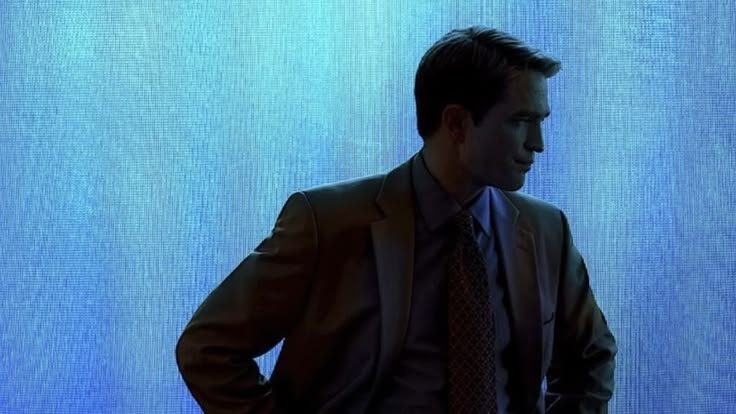
In 2006, a television show in the United States promised to expose potential sexual predators in front of millions of viewers. Cameras were hidden, online conversations were recorded, and meetings were arranged in houses set up for the occasion. The host waited for the men to walk in, then appeared to demand an explanation. It was To Catch a Predator, a segment on the news program Dateline NBC that became a television phenomenon—both hugely popular and deeply controversial.
Twenty years later, documentary filmmaker Lance Oppenheim chose this very story for his first fiction feature. Presented in competition at the 2026 Venice Film Festival, Primetime stars Robert Pattinson as Chris Hansen, the journalist and face of the show, and explores the increasingly blurred lines between news, entertainment and justice as spectacle.
But to really understand the film, we need to go back to the story that inspired it.
The True Story of To Catch a Predator
Launched in 2004 as part of Dateline NBC, To Catch a Predator was based on a partnership between the network and Perverted Justice, an organization dedicated to identifying adults seeking sexual contact with minors online.
The organization’s volunteers posed as teenagers in online chat rooms and, when someone suggested meeting up, directed them to a house rigged for filming. There, adult decoys who looked young, hidden cameras and Chris Hansen were waiting, ready to confront the men with their recorded conversations. Police were involved in many of the stings, too.
The show’s success came at a particular moment in time: the internet was becoming an ever more central part of everyday life, while fears about online dangers were drawing growing media attention. To Catch a Predator turned those fears into a near-perfect television formula: a sting, a confrontation, an unmasking.
The problem was that the operation did more than document events. The television crew helped stage them, determining when and where the meetings took place and how they unfolded. Inevitably, the need for dramatic footage raised questions about the relationship between the public interest, police investigations and ratings.
The Bill Conradt Case: When Television Becomes Part of the Story
In November 2006, the production traveled to Murphy, Texas, to stage a new sting. Among those identified through online conversations was Bill Conradt Jr., a 56-year-old assistant district attorney.
According to the allegations, Conradt had engaged in sexually explicit conversations with someone he believed to be a 13-year-old boy. In reality, the person on the other end of the screen was an adult involved in the operation.
Unlike the other men targeted by the show, Conradt never showed up at the house set up for filming. Authorities then decided to go to his home, while a Dateline crew waited nearby.
During the police operation, Conradt died by suicide, shooting himself.
The case sparked an outcry. The controversy centered not only on the man’s death, but also on the role played by the television production and the extent of the cooperation between the show’s team and law enforcement.
In 2007, Conradt’s sister, Patricia, sued NBC Universal, arguing that the network’s interest in getting footage had helped shape the way the operation was carried out. Legal problems also emerged around the same time: the prosecutor in charge declined to pursue several cases arising from the Murphy sting, challenging the way the evidence had been gathered.
The case became a symbol of To Catch a Predator’s contradictions: a show that claimed to protect children, but whose methods raised questions that became increasingly difficult to ignore.
Conradt’s death did not bring the show to an immediate end; it continued until December 2007. But it marked a turning point in the public debate over its practices.
In September of that year, journalist Luke Dittrich revisited the case in an investigation published in Esquire, titled Tonight on Dateline This Man Will Die. That article is the stated basis for Primetime.
How Much of the Film Is True?
Primetime draws on real people, events and dynamics, but it does not set out to be a faithful documentary reconstruction.
Chris Hansen is a real person, as are Bill Conradt and the organization Perverted Justice. The television stings and the controversies surrounding the show are also grounded in real events.
Other elements, however, have been reworked or invented. Andie Bender, the producer played by Merritt Wever, is one example: she was created to embody the contradictions faced by those working behind the scenes. Dan Plumb, the young man played by Skyler Gisondo, is likewise inspired by the decoys used in the stings, but is not a faithful portrait of any one person.
The approach fits Oppenheim’s filmmaking, which has long been interested in the relationship between reality and representation. Rather than meticulously reconstructing events, the director seems more interested in examining the machinery that made them possible: the transformation of news into entertainment and the gradual erosion of the boundaries between observer, participant and subject.
A Film That Looks Like It Came Straight Out of 2000s Television
It’s above all in its style that Primetime finds one of its most compelling qualities.
Oppenheim taps into the look of early-2000s television with saturated colors, almost artificial hues and a deliberately rough visual texture, far removed from the crisp digital images we’re used to. Some shots feel almost tactile: surfaces, lights, rooms and even faces take on a physical quality that evokes the material feel of television productions from the era.
This isn’t just a nostalgic exercise. The form becomes part of the story, immersing viewers in a world where any space can become a set and any gesture can become television.
It’s a particularly interesting choice for a director with a documentary background: Oppenheim doesn’t try to imitate reality with a neutral aesthetic, but instead recreates its artificiality. In that sense, Primetime keeps asking how much of what’s presented as true is actually authentic.
Interesting Characters, Less Convincing Writing
The direction has a distinctive voice, but the screenplay doesn’t always live up to its ambitions.
Primetime is at its best in the first half, as it gradually lays out how the show works, the dynamics within the production team and the drive for ever-greater television success. The story moves with energy, building tension and drawing us in with characters who remain compelling despite the morally murky world they inhabit.
But as the story approaches its turning point, the film seems to lose some of its focus. The ending, which should be the emotional and narrative climax, doesn’t fully deliver on what came before. The film raises plenty of questions, but the screenplay struggles to bring them together in an equally powerful conclusion.
What keeps the story going, above all, are the performances.
Robert Pattinson plays Chris Hansen as a man completely absorbed in his public image, blending charisma, ambition and a hunger for recognition. It’s not simply an impersonation of the host, but a portrait of someone who seems increasingly unable to separate himself from his television persona.
Merritt Wever’s Andie Bender is just as compelling. Through her, the film explores the conflict between professional ambition and personal convictions: Andie helps build the show’s success, but must also face the consequences of the choices she’s made. The director intends her story to reveal the weight of the production machine, which keeps running even as the people inside it begin to have doubts.
Skyler Gisondo’s Dan Plumb offers a different perspective: that of a young man who simply wants to work as an actor and finds himself caught up in something far bigger than he is. Through his character, Primetime shows how the spectacle can draw in and transform even those who think they’re only playing a minor role.
When Justice Becomes Entertainment
Despite its weaknesses as a piece of writing, Primetime remains an intriguing debut, particularly for the way it revives a specific audiovisual language and uses it to explore the contradictions of an era.
The story of To Catch a Predator is deeply tied to 2000s American television, but the questions it raises aren’t confined to the past. What happens when news has to become entertainment? Where does the public interest end and entertainment begin? And how does reality change when someone stages it to be shown on camera?
Oppenheim doesn’t always find a fully realized narrative shape for these questions, but he gives them a visually powerful form.
And perhaps that’s where Primetime is most effective: not so much in reconstructing a true story as in reminding us that even what we see happening on camera can be, at least in part, staged.